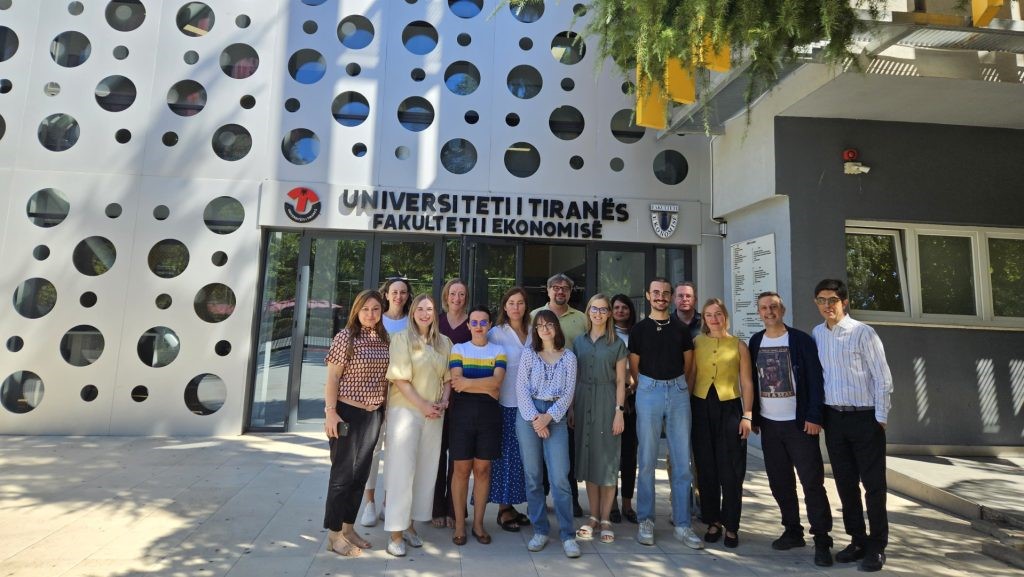
The future of learning may be far more flexible than we traditionally imagine. Different institutions, diverse learning experiences, and accumulated competences can become part of a single individual learning journey. This is the direction UNINOVIS is pursuing, and the workshop relating to Lifelong Learning held in Tirana in September focused on one of the key steps towards this vision: the development of micro-credentials and the UNINOVIS Diploma.
When one study programme is no longer enough
The job market is changing faster than traditional study programmes can adapt. New technologies, the development of artificial intelligence, sustainability challenges, and changing models of professional activity are creating an increasing need to continuously update knowledge and competences. As a result, the focus is shifting beyond what a person can learn during several years of study towards how they can continue learning throughout their lives – whenever a specific need arises.
‘Today, higher education operates in a dynamic environment where the competence needs of the labour market and society are changing increasingly rapidly. Technological developments, the growth of artificial intelligence, sustainability challenges, and new models of professional activity mean that people increasingly need not a new qualification, but opportunities to purposefully acquire, update, or expand specific knowledge, skills, and competences,’ says Dr Rasa Greenspon, Head of the Study Development Unit at Kauno kolegija.

According to her, traditional study programmes will continue to form the foundation of higher education, but more flexible learning pathways are needed alongside them. Micro-credentials are one such opportunity. These are smaller learning units focused on specific knowledge, skills, or competences. In the UNINOVIS context, however, their significance is broader: the aim is for them to become part of a system that connects the competences and expertise of different higher education institutions.
Micro-credentials – smaller learning units, greater opportunities
Speaking about UNINOVIS micro-credentials, Dr R. Greenspon highlights one important aspect: a micro-credential should not be equated with a simple certificate of participation in training.
‘The essential difference is that a micro-credential should not be understood merely as a short course or a certificate confirming participation in training. It validates specific, predefined, and assessed learning outcomes – what the learner actually knows and is able to do after completing the learning,’ explains the Head of the Study Development Unit at Kauno kolegija.
In the UNINOVIS context, the international dimension adds further value. Different alliance institutions can contribute their academic and professional expertise, specialist knowledge, and research outcomes. The micro-credentials being developed are linked to the UNINOVIS Excellence Hub thematic areas and are grouped according to the competences they develop into three categories: Core Data, Applied Data, and Data for Life.
This gives students the opportunity to choose beyond what their own institution offers. Their learning experience can become significantly broader, bringing together knowledge, expertise, and competences from different higher education institutions.
What if you could shape your own learning journey?
Imagine a student studying at Kauno kolegija who wants to develop a particular competence at another UNINOVIS partner institution. They could choose a relevant micro-credential, study virtually, gain access to the knowledge and expertise of lecturers and professionals from another country, and incorporate this experience into their individual learning journey.
‘In the future, students could acquire some competences at their home institution and develop others by choosing micro-credentials offered by different UNINOVIS partners. In this way, an individual learning journey could be shaped not only by the structure of a study programme, but also by the student’s interests, professional goals, and the competences they wish to develop,’ says Dr R. Greenspon.
A common UNINOVIS micro-credential catalogue is currently being developed to bring together information about learning opportunities offered by different alliance partners. This means that learning could gradually become not just a ‘service provided by one institution’, but an opportunity within a broader international academic space.
From individual courses to a shared learning journey
In the UNINOVIS vision, micro-credentials are not isolated learning experiences. They are intended to be accumulated and combined, creating an individual learning pathway. By completing a defined set of micro-credentials and meeting the established requirements, learners could eventually progress towards a UNINOVIS Diploma – an alliance certificate recognising a set of accumulated competences but not conferring a higher education degree.
‘The common model should help connect these individual experiences: clearly show what learning outcomes a student has achieved at different institutions, how they relate to one another, how they are recognised, and what overall set of competences they form,’ explains Dr R. Greenspon.
The strengths and expertise of all eight UNINOVIS partners are essential to this approach. By bringing them together, students gain broader opportunities to learn across different institutions, combine courses and virtual learning opportunities, and build an international learning pathway that reflects their individual needs.
‘The greatest value emerges when cooperation translates into concrete learning opportunities for students,’ emphasises Dr R. Greenspon.
The greatest challenge is not technology
Creating a common learning system for different higher education institutions is not a simple task. The partners operate within different national higher education systems, which means that approaches to micro-credential regulation, ECTS, learning assessment, quality assurance, and recognition may differ. However, according to Dr R. Greenspon, mutual trust is just as important as administrative solutions.
‘The key issue is trust and a shared quality culture. If the aim is to enable students to learn at different partner institutions within the alliance, it must be ensured that the learning outcomes achieved are clearly defined, their assessment is transparent and reliable, and the competences acquired are recognised across the alliance,’ she emphasises.
From ideas to particular action in Tirana
These issues were at the heart of the WP2 workshop held in Tirana in September. The partners worked on the micro-credential course catalogue, the UNINOVIS Diploma model, stakeholder engagement, and the further action plan through the end of 2026 and into 2027.
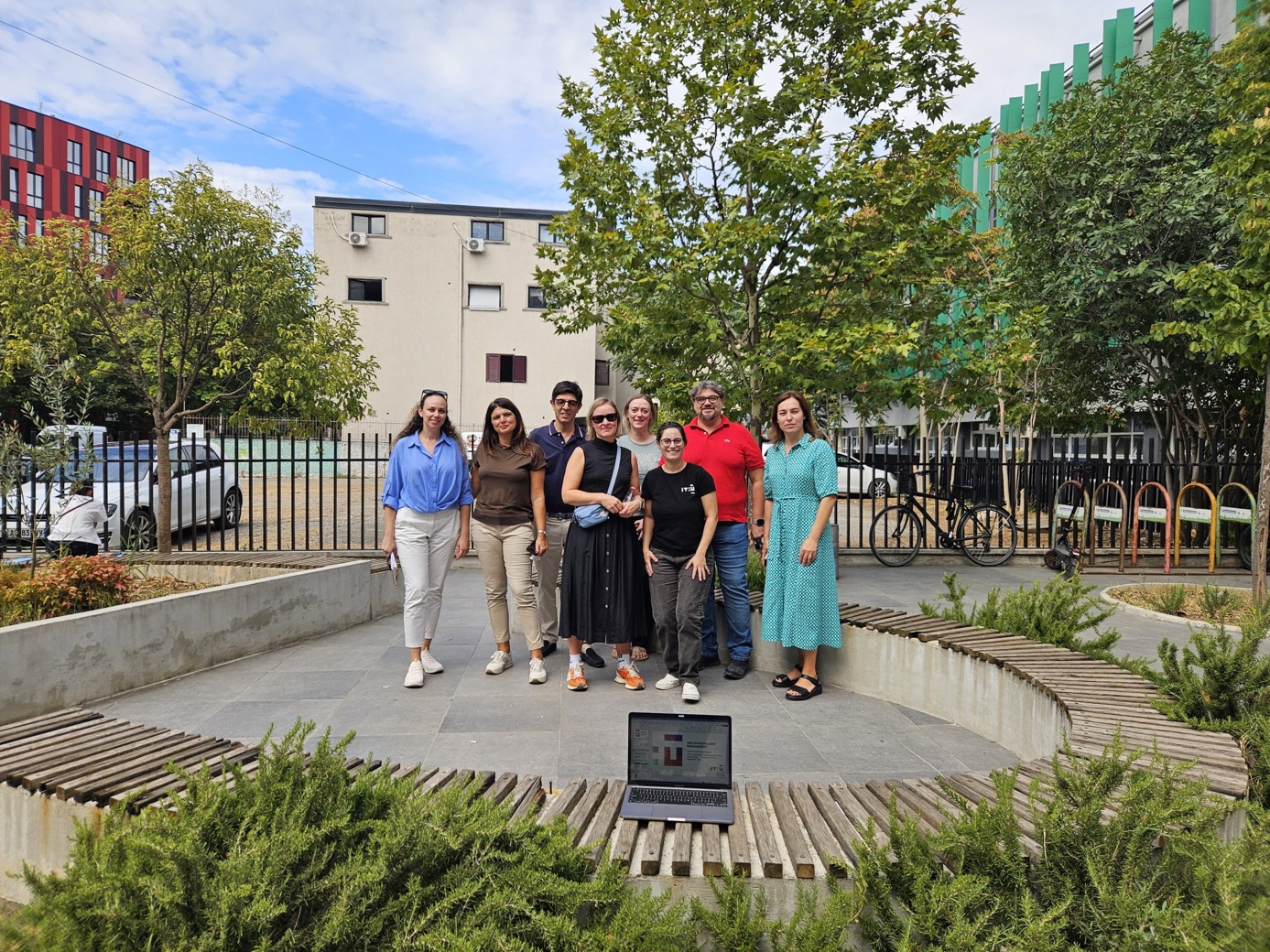
Key outcomes include the development of micro-credential course catalogue guidelines, an implementation plan, a stakeholder survey and online event, initial guidelines for the UNINOVIS Diploma, and an updated (Lifelong Learning) action plan. Together, these steps mark a move from a shared vision towards particular solutions for building a functioning UNINOVIS learning system.
The future of learning is not one direction, but an individual journey
The ultimate aim of UNINOVIS in this area is not simply to create another learning format. The more significant change lies in reshaping the way we think about learning itself. Learning can take place at different stages of life, in different institutions, and in different forms. Competences can be accumulated gradually, while an individual learning pathway can be shaped around a person’s needs, interests, and professional goals.
‘In a few years, I would like to see not separate initiatives or models being developed, but a genuinely functioning common UNINOVIS learning system. One in which students can easily find micro-credentials offered by different alliance partners, choose among them, study virtually at different institutions, accumulate the competences they acquire, and build an individual learning pathway,’ says Dr R. Greenspon, sharing her vision for the future.
When this vision becomes a reality, UNINOVIS will mean more to students than simply the opportunity to study at different universities. It will give them greater agency in shaping their own learning journey by drawing on the knowledge and competences available across the alliance.
This is where a university alliance can become more than a form of institutional partnership – it can evolve into a living international learning space that creates added value for both learners and institutions. By bringing together the expertise, learning opportunities, and resources of different universities, the alliance can offer something that no single institution could provide on its own. In this space, the boundaries between universities become less important than a person’s desire to learn, grow, and develop the competences needed for the future.