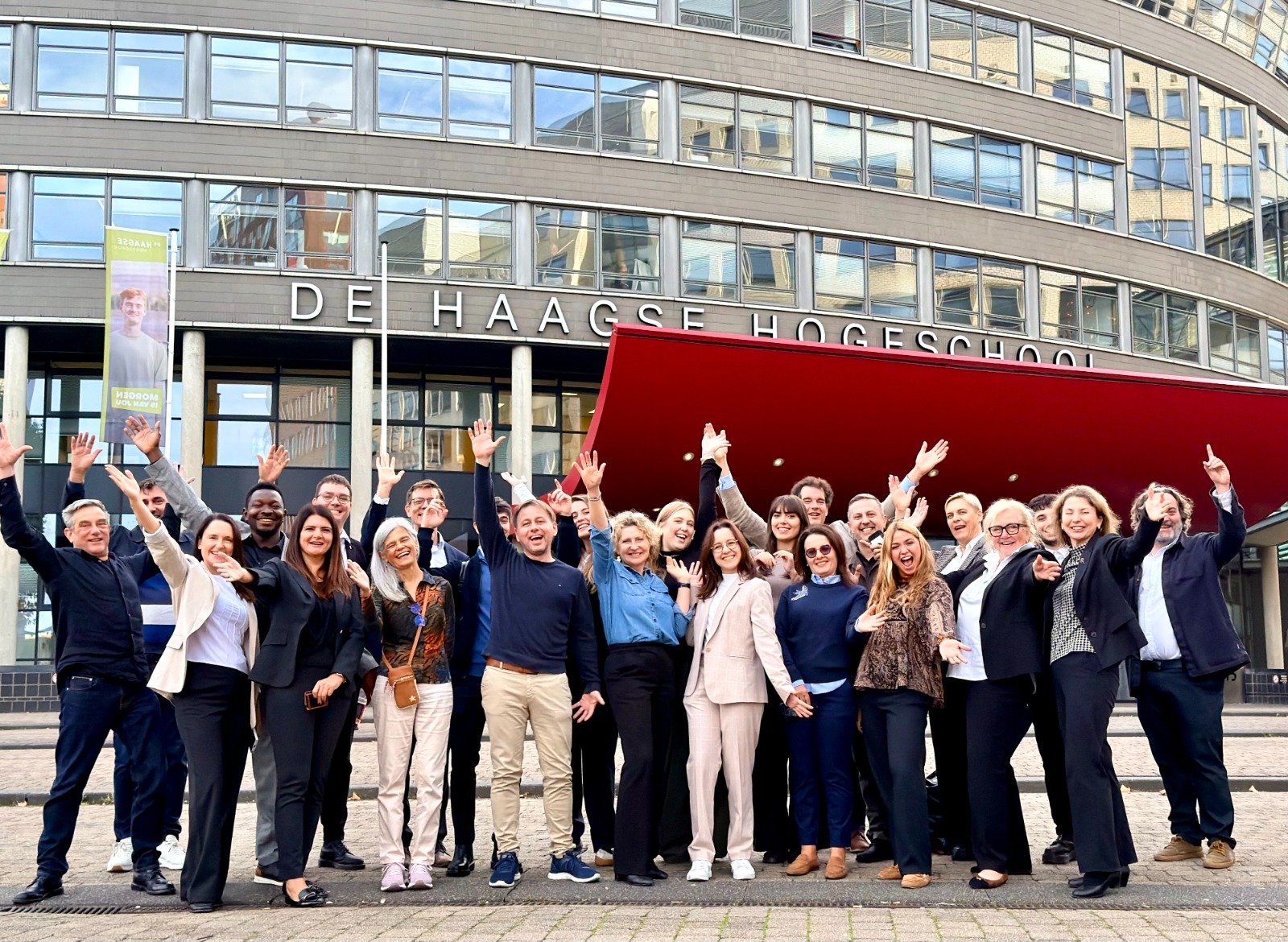
On 15 and 16 October 2026, The Hague University of Applied Sciences (THUAS) hosted the Executive Council of UNINOVIS. Representatives from across the alliance met for two days at THUAS and its Sport Campus. They discussed the Council's mission, the alliance's communication strategy, the Excellence Hubs, the sustainability plan and micro-credentials, and held working sessions for academics, administrative staff and students.
A shift in focus
One message ran through both days: UNINOVIS is moving from setting up alliance structures towards visible results, institutional embedding and long-term sustainability. Discussions pointed to four priorities for 2027: delivering joint educational opportunities, activating the Excellence Hubs, strengthening institutional participation, and building a model for collaboration that lasts.
Micro-credentials, macro recognition
Menno de Vos explained how micro-credentials will work. The courses are mainly for Professionals (non-degree), run from 1 to 30 ECTS credits (most common is 5 or 10EC for potential stackability) and can be offered at level 5, 6 or 7. Students in regular bachelor's and master's programmes who take a relevant course would normally receive an Open Badge (no MC as this would be a double reward). For recognition of their results: it is up to the institution of the students' degree programme to decide if a result will be accepted as part of the degree programme).
An UNINOVIS Pathway Certificate (for now: joint education for students in degree programmes), possibly listed in the diploma supplement, could add value for those students, subject to national regulations and institutional approval. UNINOVIS cannot award formal qualifications without legal status, so each university has to arrange its own certification, quality assurance and recognition. Partners and Excellence Hubs are now asked to identify existing or new courses that answer a clear need, and the work needs closer coordination with the course catalogue, website, marketing and administration.
Excellence Hubs: from idea to action
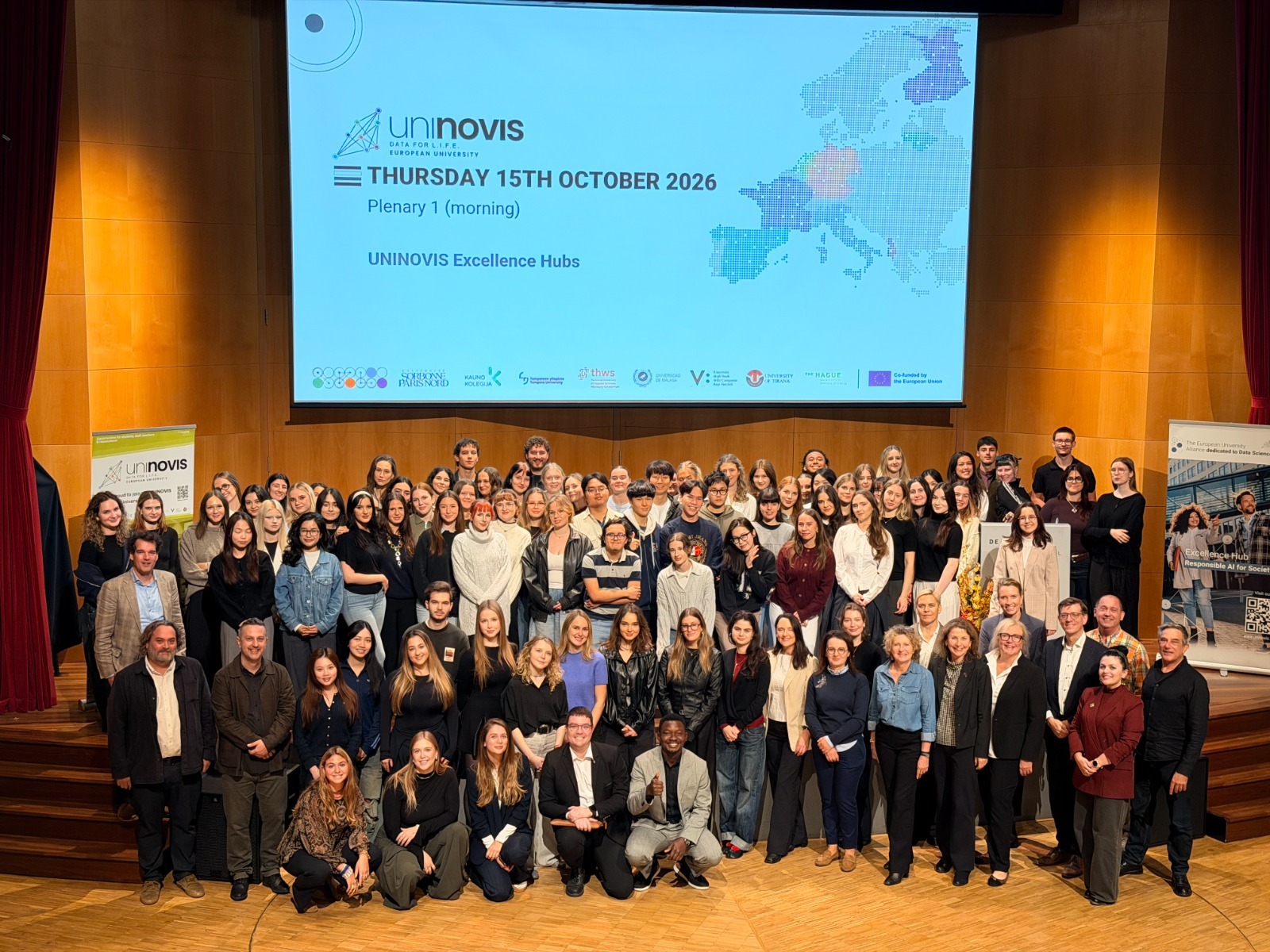
The Hubs were presented with their purpose, institutional position, resources and opportunities for collaboration, and students from the International Communication Management programme took part in the session. These third year students, 100 in total, were presenting current results in their Research & Advice Project on all 8 Excellence Hubs, leading to new insights for the Council. This helped the Council develop insights in how the Hubs can become operational, with active academics, researchers and external partners, and to concentrate on a manageable number of themes that can lead to joint projects, educational activities and funding.
Making UNINOVIS visible at every partner
The communication and branding strategy was presented as a follow-up to a survey previously carried out by the Executive Council, together with the communication circuit: how information is passed on and how members can contribute. Participants called for more visibility at each institution, closer involvement of communication colleagues and better sharing of results. Administrative colleagues discussed the ambassadors' network and internal staff mobility, and the discussion pointed to mobility that serves specific collaboration goals and produces identifiable outcomes.
Students and new opportunities
Students had their own session on their role as UNINOVIS representatives, the approval procedure for the Student Council's rules and regulations, and next steps for the Student Council in Kaunas. The closing discussion asked two questions: where is student involvement most needed, and how can the Executive Council support it better? The Council also looked ahead to the Erasmus Mundus joint degrees RISE and AIDA, hackathons, and a collaboration with the Kauno kolegija Wellness and Sport Center.
What's next
Each university closed by naming one priority action to take home. At Council level, the proposed follow-up includes confirming a short list of measurable alliance-wide outcomes for 2027, clarifying the micro-credential course pipeline and approvals, giving each Excellence Hub active members, ownership and workplans, and clarifying the Student Council's formal position.
The two days in The Hague were interesting and productive for the Executive Council. Colleagues and students from across the alliance shared their views on micro-credentials, the Excellence Hubs and student involvement, and the discussions turned into concrete follow-up. UNINOVIS thanks THUAS for hosting and everyone who took part for their contributions and looks forward to continuing the work together.